
Finding People Through South Jordan Records
A useful search begins with the fact already known. A full or partial name can lead to a parcel owner, a licensed professional, a business principal, or a court party. An old street address points first to the Salt Lake County Assessor, then to the Recorder for prior transfers. A date or family event may instead belong in a vital-record index, obituary collection, probate file, or archive series. These sources record different relationships, so no single result should carry the whole search.
South Jordan is not the county seat. City Hall keeps city-created files, yet major land and archive work often leads to Salt Lake City. General-jurisdiction court files lead to West Jordan, and statewide portals handle professional licenses, corrections, and many court searches. That split matters when an online index does not show the record itself. The office that created or filed the item remains the best place to confirm it.
- Search the Assessor by owner or address, then save the parcel number and distinguish the physical address from the tax-mailing address.
- Use the parcel in the Recorder search to identify deeds, liens, releases, plats, and prior owners.
- Check Utah Xchange for a public court-party trail, narrowing a common name by court, case type, or date.
- For older residents, pair State Archives name indexes with newspapers, tax ledgers, and Polk or reverse directories.
- Ask the record custodian for a defined file when the index, image, or date range is not online.
Offices Behind a South Jordan Search
Three levels of government shape a South Jordan people search. The City Recorder receives GRAMA requests for municipal records such as permits, city licenses, meetings, and releasable police reports. Salt Lake County holds the land, assessment, election, marriage-license, and county archive trails. Utah courts keep their own case files, while state agencies hold vital certificates, licenses, correctional records, and historical name indexes. The detailed access rules and copy procedures appear with the South Jordan public records system.
Salt Lake County Recorder
2001 South State Street, Suite N1-600
Salt Lake City, UT 84190
385-468-8145
Salt Lake County Clerk
Election and marriage-license records
Salt Lake County, Utah
County office contact
South Jordan City Recorder
1600 W. Towne Center Drive
South Jordan, UT 84095
801-446-4357
City Hall is open Monday through Thursday from 8 a.m. to 6 p.m. and Friday from 8 a.m. to noon. Recorder office hours are Monday through Friday from 8 a.m. to 5 p.m. Calling first is wise when a trip depends on a public terminal or an archived file.
South Jordan Property Search by Name
The Salt Lake County Assessor Property Search accepts an owner query with at least three letters in Last, First format. Address mode separates frontage number, prefix direction, street name or number, street type, and suffix direction. Parcel mode accepts the first ten digits and an optional final four-digit part. Those choices fit South Jordan's numeric grid, where dropping a direction can point to the wrong place.
| Search mode | Useful input | What to keep |
|---|---|---|
| Owner | At least three surname letters | Indexed owner and parcel |
| Address | Number, direction, street, type | Situs and mailing addresses |
| Parcel | Ten digits, plus four when known | Stable 14-digit parcel key |
The parcel card can show owner name, parcel number, situs address, mailing address, subdivision or legal context, values, and tax-year attributes. Situs means the physical location of the land. Mailing means the address used for tax notices. They may differ. An owner may be a trust, company, or absentee owner, so the result does not prove who lives at the property.
Open the official Assessor search to see how its owner and address modes are arranged.
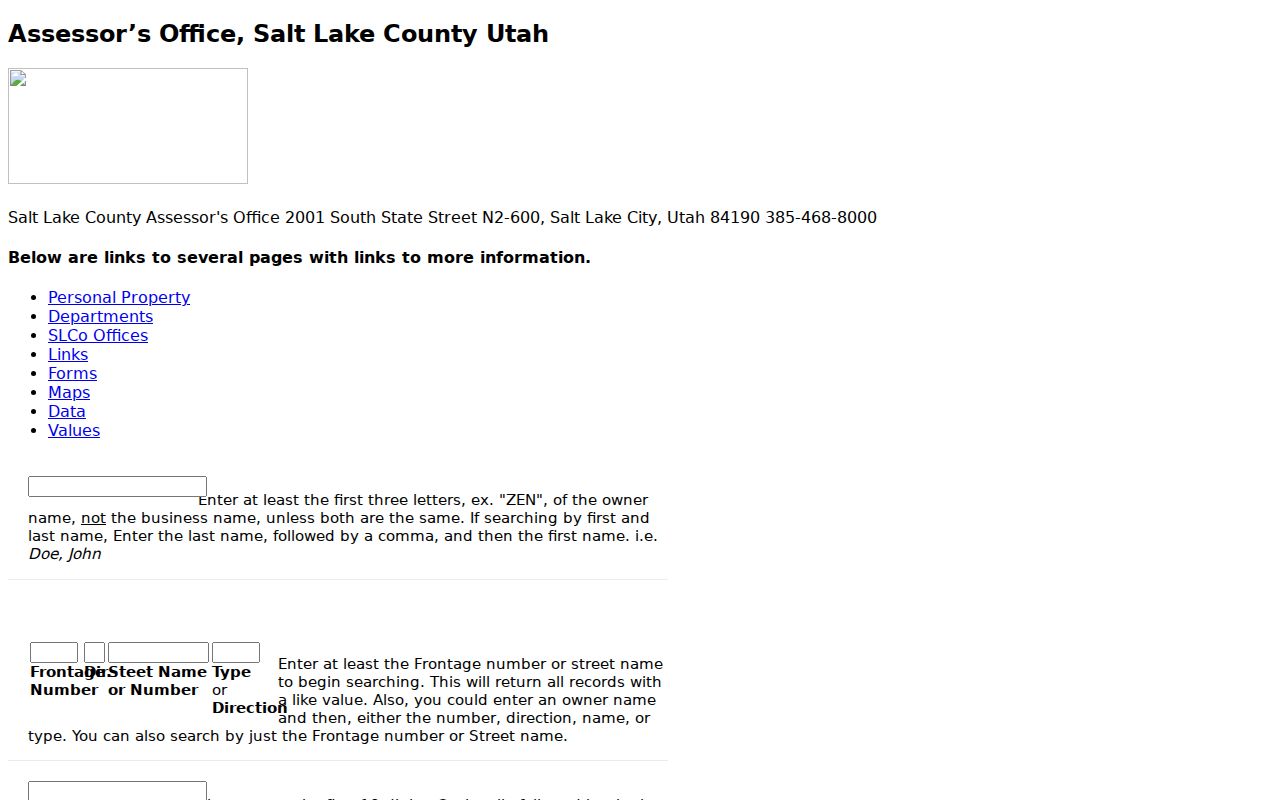
The separate fields make the local address direction and parcel number far more reliable than a loose text search.
Build a South Jordan Deed Search
Once a parcel is known, the Recorder becomes the next stop. Its free Public Search starts with terms acceptance and then asks for an Address or Parcel selected from autocomplete. The county warns that data may lag by at least a day. Richer Data Services can search owner, parcel history, legal descriptions, recorded documents, tract indexes, title chains, and plats. That service is metered, beginning with 24-hour access and a set number of data units.
The Recorder Public Search shows the property-oriented entry point used for South Jordan records.
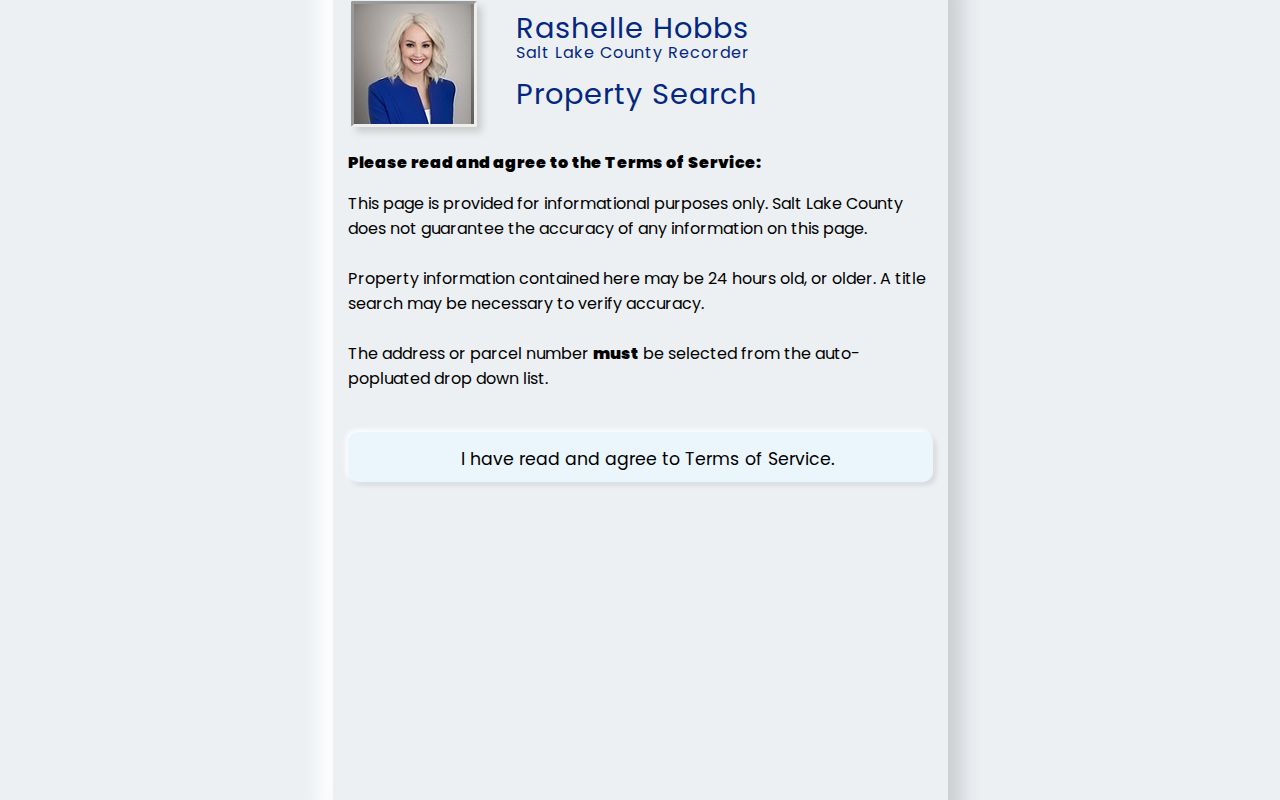
This screen explains why a parcel should be captured first: the free route is not an open-ended surname directory.
Copies require more exact identifiers. The document request asks for book and page, or index book, page, and line, plus party name, recording date, and document type. Standard pages cost $2, historical pages cost $5, and certification adds $5 plus the $2-per-page charge. An official title trail may require the paid system, counter help, or ordered images.
- Grantor
- The person or entity transferring an interest.
- Grantee
- The person or entity receiving that interest.
- Legal description
- The lot, block, subdivision, or boundary text that can survive an address change.
- Chain of title
- The ordered sequence of recorded transfers for a parcel.
Search South Jordan Court Parties
South Jordan Justice Court handles city ordinance matters, traffic cases, infractions, class B and C misdemeanors, and small claims. Third District Court in West Jordan handles general civil, domestic, probate, felony, and class A misdemeanor cases. Utah's Xchange portal searches public district and justice court information by party or case details. Federal cases belong in PACER, not Xchange.
| Court | Main scope | Search route | Fallback |
|---|---|---|---|
| South Jordan Justice Court | Local violations and small claims | Xchange where converted | Ask court staff and verify terminal access |
| Third District Court, West Jordan | Civil, probate, felony, domestic | Xchange | Free courthouse terminal and court file |
| U.S. District Court, District of Utah | Federal civil and criminal | PACER | Federal clerk |
Xchange can narrow by jurisdiction, case type, court, date range, birth date when present, citation, or judgment-only mode. Results may show county, court, case type, case number, filing date, party role, and a history or document link. The first two case-number digits indicate filing year. A party address appears only when one was filed, so a blank field proves nothing about residence. Results stop at 500.
Utah Courts' Xchange help illustrates the search and result screens.
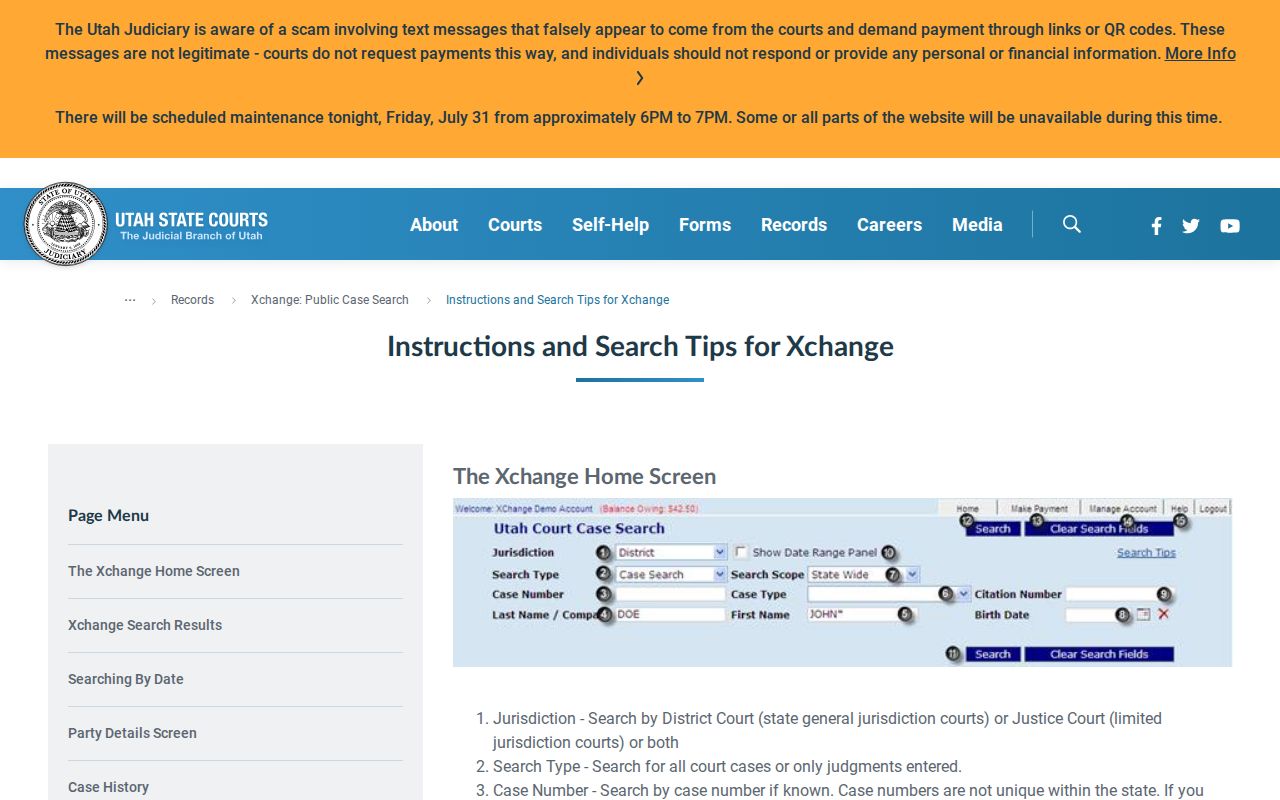
The field mix is especially useful for narrowing a common surname to West Jordan or South Jordan Justice Court activity.
Access tip. Xchange costs money online, but most district courthouses and the Utah State Law Library offer free public terminals. Call a justice court before relying on terminal access there.
Follow South Jordan Vital Records
Recent certificates are not open name directories. Utah's Office of Vital Records and Statistics and local health offices issue birth and death records, while marriage and divorce certificates exist for 1978 through 2010. County marriage records and district court divorce files cover other periods. Utah Code section 26B-8-125 opens birth records after 100 years, death records after 50 years, and other vital records after 75 years. Newer copies require a qualifying relationship, identity, and supporting proof.
The fee schedule effective July 1, 2026 lists $25 for birth, marriage, or divorce certificates and $35 for death certificates. An extra copy of the same record ordered that day is $10. Older application PDFs still show an $18 base fee, so the dated schedule controls. Online ordering, local counter service, and mail are available. The state advises allowing at least six weeks for mail because its pages give conflicting estimates.
Utah's certificate forms page links each current application.
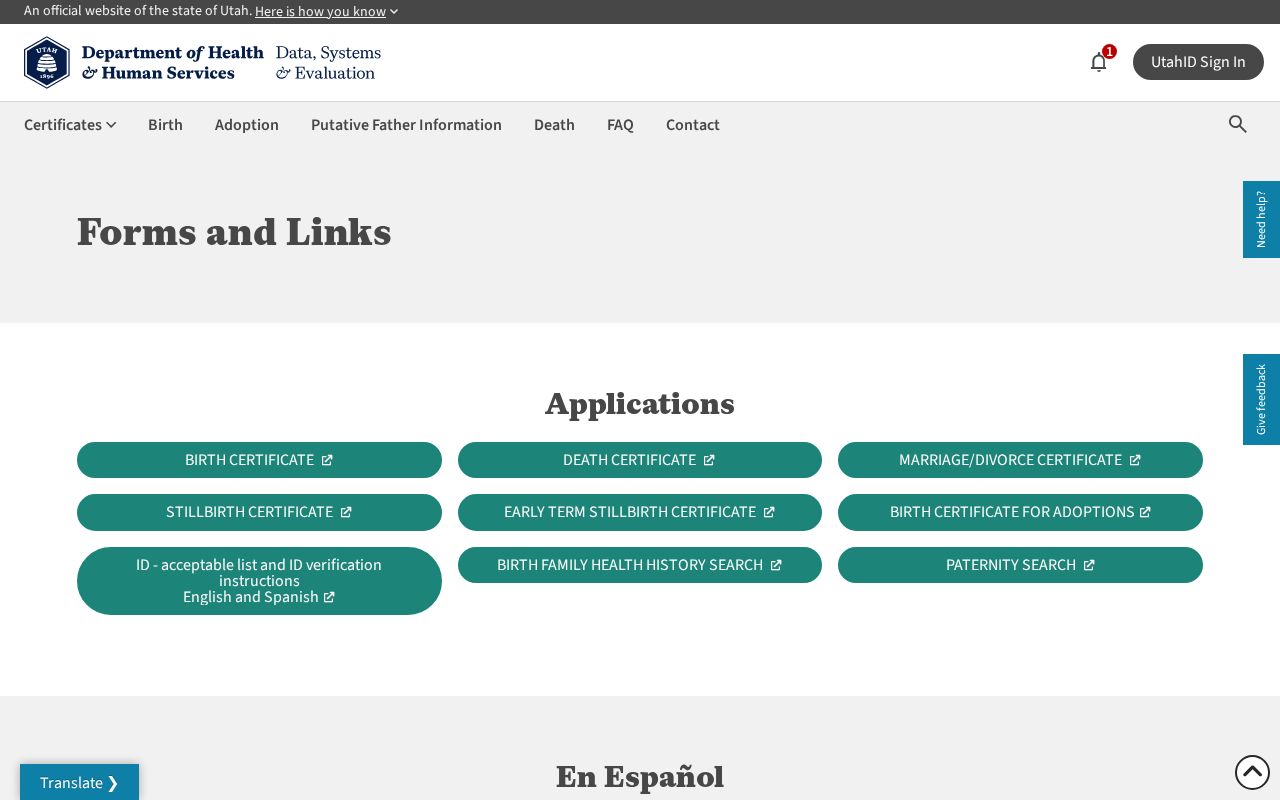
The form choice must match the event and year; a divorce decree remains a court record, not the same item as a state divorce certificate.
Request Missing South Jordan Records
Utah's Government Records Access and Management Act, or GRAMA, applies to executive-branch and local government records. South Jordan's form asks for the requester's name, address, phone, email, date, status, a specific record description, and a delivery choice. It also permits uploads for identity or authorization where a police, fire, or medical record requires proof. Ask for an existing record with a useful date range, address, permit number, report number, or named project.
South Jordan's GRAMA request form provides inspection, paid-copy, and fee-waiver choices.
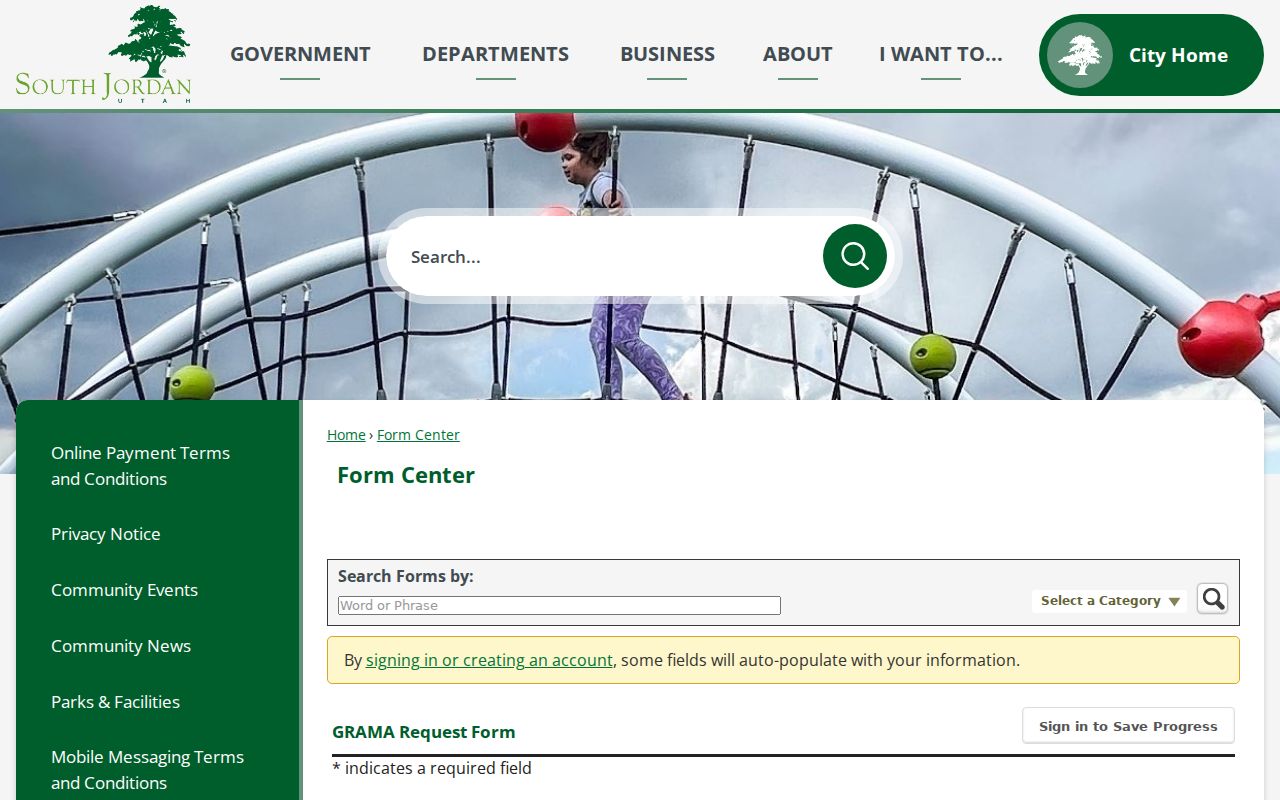
The request options reinforce a useful rule: ask to inspect when a copy is not needed, and set a fee cap when staff work may be substantial.
The city posts a ten-business-day ordinary response period and five business days when the requester demonstrates a public benefit. Paper copies are 25 cents per page. Police and traffic-accident reports cost $15 as of July 1, 2024. A denial should state the classification or exemption and the appeal route. Court files follow judicial access rules, so GRAMA does not replace Xchange or a court clerk request.
Trace South Jordan Address Changes
South Jordan addresses sit in the Salt Lake Valley grid. Numeric streets and the N, S, E, or W direction are part of the legal clue, not optional style. City Hall itself uses both 1600 West Towne Center Drive and 10610 South. The county form separates five possible situs parts: frontage number, direction, street name or number, street type, and substructure suffix. A recorded plat may carry the approved legal situs.
An old address can remain useful even after growth changes the city label. South Jordan incorporated in 1935 and added roughly 2,000 acres on the west in 2023. Older Daybreak-area land or permit evidence may therefore be indexed under unincorporated Salt Lake County or another geography. ZIP codes are postal areas, not city boundaries. Confirm a border parcel in GIS before choosing the city or county custodian.
Follow this flow: old address to Assessor parcel, parcel to Recorder deeds, deeds to later owners, then tax ledgers, permits, newspapers, or reverse directories for occupants. A legal description is often more stable than the street name. County Archives appraisal cards can add building details and photographs, while recorded address affidavits may connect an obsolete and current situs.
Historical South Jordan Name Search
South Jordan's municipal history starts later than many county record series. Salt Lake County Archives holds county material from 1852 forward, while South Jordan incorporated as a farming community in 1935. Early residents may appear under county, church, census, tax, or metropolitan directory headings rather than a neat South Jordan catalog label. County Archives requires an appointment or contact request, warns of a 15-business-day reply, and says almost everything is free.
Utah State Archives lets researchers search names or browse by surname and first name. Partial names work without wildcard symbols. Results lead to a series page, where some items have free images and others need an order form. Salt Lake County examples include citizenship certificate stubs from 1907 to 1925, coroner inquest files from 1870 to 1871 and 1886 to 1937, and criminal case files from 1896 to 1915.
The State Archives Name Indexes show both search and browse paths.
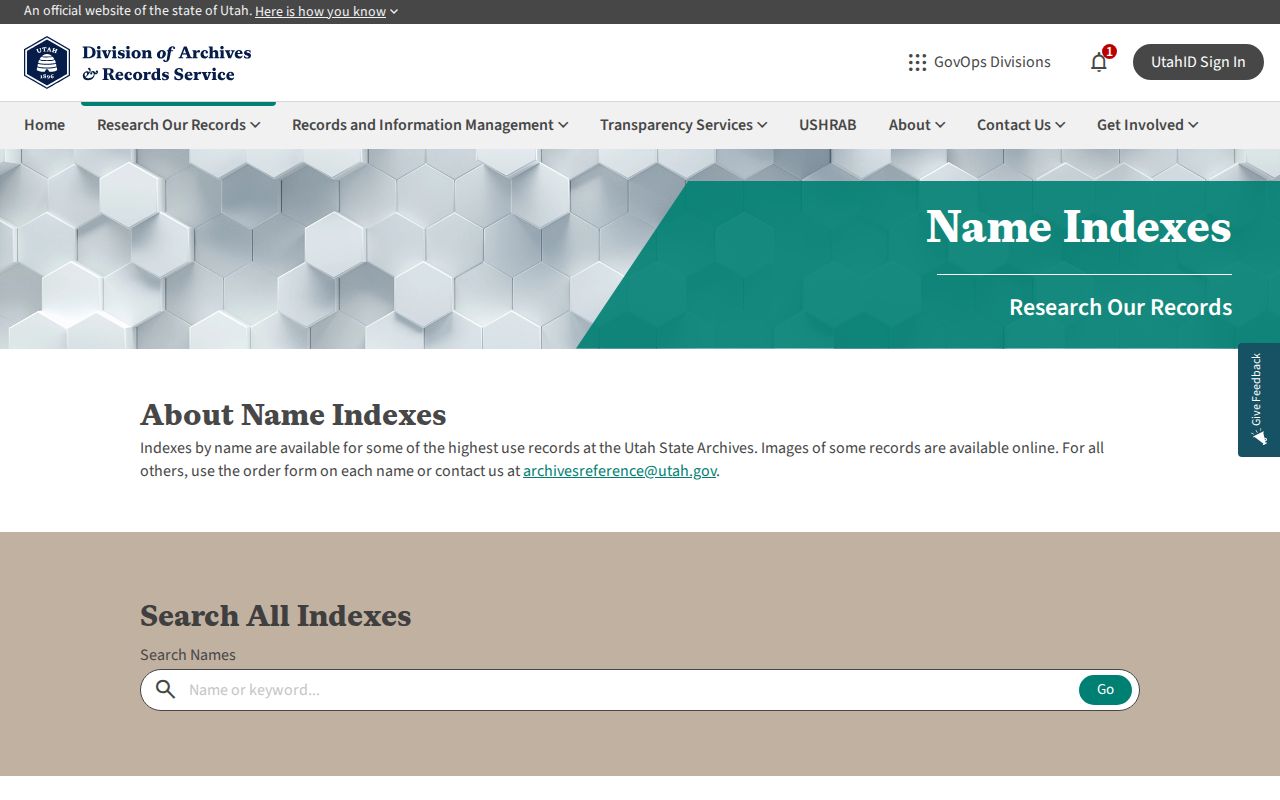
The series links matter as much as the name hit because they identify the record keeper, date span, access method, and image availability. WPA workers also compiled Utah's Soundex birth index in the 1930s. That phonetic system helps with spelling drift and hard-to-read certificates. The online part covers 1904 through 1924, though later cards also exist. Pair it with Utah Digital Newspapers, census schedules through 1950, and county tax ledgers when a person moved between census years.
South Jordan Professional Search Sources
Two state tools can distinguish people who share a name. The Utah Division of Professional Licensing lookup searches by Name plus Profession or by License Number. Name matching can use BEGINNING with or CONTAINING, which helps when only an initial or part of a surname is known. Results establish a license identity, profession, and status. They do not establish a current home address.
Utah Business Search works at the entity level. State business data may show an entity, status, registered agent, principal, and filing address. A filed address can belong to an agent or service company rather than the person sought. South Jordan also posts a rolling list of newly issued local business licenses, while older local license evidence may require a focused city GRAMA request.
A professional or business match gains weight when its name and address align with an assessor parcel, deed, court filing, or dated newspaper item. If the details conflict, preserve each source date instead of merging them. A former filing address and a current license status can both be accurate for different points in time.
South Jordan Search Privacy Boundaries
Public access has firm edges. Xchange omits sealed, expunged, juvenile, adoption, and civil-commitment cases, along with several private family and protective case classes. Recent vital certificates stay restricted. Voter data withholds full birth dates, government ID numbers, Social Security numbers, email, phone, and signatures, and At-Risk classification can protect identity. The voter self-lookup is meant for the voter and requires a birth date plus CAPTCHA.
Utah's Safe at Home program gives eligible survivors a substitute public address and mail forwarding. Actual home and mailing addresses, city, county, precinct, phone, and location identifiers receive protection. The program does not erase older independent records. A truthful deed also does not vanish merely because a person asks a commercial compiler to remove a listing.
Lawful use. Use South Jordan records for lawful personal research. Utah law addresses stalking and electronic harassment, and public registry information may never be used to threaten, stalk, or harass a person or family.
Verify Conflicting South Jordan Records
Official sources can disagree without either being false. A court address appears only if someone filed it. An assessor mailing address can point to a trustee or manager. A business address may identify a registered agent. Census estimates and city planning figures use different dates and geographic scopes. South Jordan had 77,487 residents in the 2020 Census and an estimated 86,156 in 2024, while a July 2026 city planning page used 89,114 and a larger area figure.
Date each finding and ask what the source was built to show. Ownership comes from the assessment roll and recorded instruments. Occupancy needs a directory, census, permit, newspaper, or other dated evidence. Kinship is strongest in a vital record, probate filing, or obituary that names the relationship. Court status comes from the case file, not a copied summary. Certified copies matter when an official version is required.
A commercial people finder may combine current and old data, but its convenience does not settle identity. Compare a key claim with the source office, record date, and geographic scope. That disciplined cross-check is especially important in fast-growing west South Jordan, where annexation, new plats, and postal labels can move faster than older indexes.